Med Spa and Aesthetic Marketing Strategies: Pages, Booking, Reviews and Advertising
The med spa and aesthetic marketing strategies that work follow the steps a client takes. They search for a treatment nearby. They judge you by your reviews and photos. They read a page that tells them the price and who will treat them. Then they book from their phone. After the first visit, a membership or a well-timed reminder brings them back.
Which treatment pages should a med spa website have?
Start with the treatments that make most of your revenue or that you most want to grow. That usually means neurotoxins, dermal fillers, one or two laser or energy treatments, a skin treatment such as microneedling or chemical peels, and body contouring or medical weight loss if you offer them.
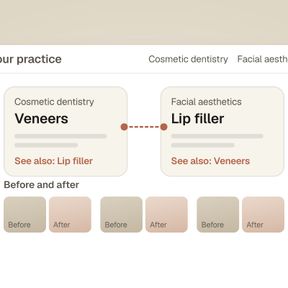
Give each treatment its own page. A single “Injectables” page with five paragraphs cannot rank for “lip filler near me” and “Botox for forehead lines” at the same time, and it cannot answer either client properly.
Each page should answer, in this order:
- What it is and what it treats, in two or three sentences, at the top.
- Cost. A starting price or a range, and what changes it: per unit, per syringe, per session, the number of sessions, membership pricing.
- Who it suits and who it does not.
- What to expect: how long the appointment takes, how it feels, downtime, when results show and how long they last.
- Who performs it: the injector’s or provider’s name, license type and training, with a link to their profile.
- Results: consented before-and-after cases with a caption saying what was done.
- Questions clients ask, answered briefly.
- A booking button for that treatment, not a link to your general booking page.
When one treatment has distinct uses that clients search separately, split it further. Lip filler, cheek filler and under-eye filler are different searches with different questions. Do this only when you perform enough of each to say something specific. A page that repeats the filler page with one word changed adds nothing.
Injector profiles deserve their own pages. Clients choose an injector as much as a spa, and reviews often mention injectors by name. Give each injector a profile with a photo, credentials, years of experience, the treatments they focus on and a link to book with them. Then a client who searches for an injector by name finds that page.
How should online booking and memberships work?
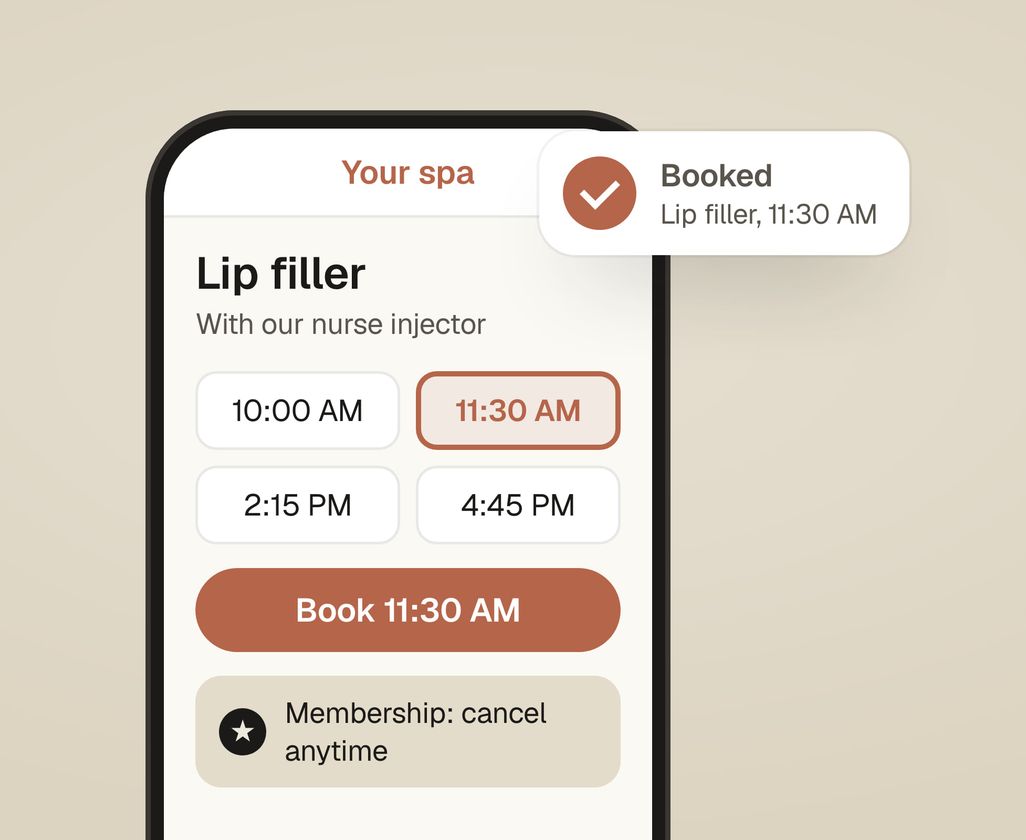
Aesthetic clients often book on a phone, and many book outside business hours. Test your own booking flow on a phone, from the treatment page to the confirmation, and count the taps. Common problems:
- The booking button opens a desktop-sized widget that is hard to use on a phone.
- The client has to create an account before seeing available times.
- Treatment names in the booking system do not match the names on the website.
- The deposit or cancellation policy appears only at the last step.
Booking platforms such as Boulevard, Vagaro, Zenoti and Mangomint can link straight to a specific treatment or provider. Use those links on each treatment page and injector profile, so a client who has decided does not have to search again.
A membership gives a client a reason to come back every month. A good membership page says plainly:
- what is included each month
- the monthly price
- what members pay for treatments, compared with non-members
- whether unused credits roll over
- how to cancel
Clients distrust memberships they cannot leave, so state the cancellation terms on the page.
Rebooking matters as much as the first booking. Set reminders by treatment, timed to when results usually fade for that treatment. Your injectors can give you those timings. Send them by text or email from your booking system, with a link straight to that client’s usual treatment and provider.
How do you get more reviews and use before-and-after photos?
How do you get more reviews?
Clients compare spas on rating, review count, and how recent and specific the reviews are. The process:
- Send a text with the review link the same day, while the result and the experience are fresh.
- Ask every client the same way. Asking only the happy ones breaks Google’s rules, and a wall of perfect reviews is hard to believe.
- Never offer credit, a discount or a free add-on for a review. Google prohibits it, and the FTC’s rule on fake and incentivized reviews applies to businesses of every size.
- Reply to every review, briefly. Don’t confirm that the reviewer is a client, and don’t mention treatment details they did not share themselves.
Google reviews matter most for the map. Yelp and RealSelf matter for aesthetic clients in many markets, so keep those profiles accurate too. Our guides on getting a Google review link and responding to Google reviews cover the mechanics.
How should a med spa use before-and-after photos?
Clients want to see your own results, so use real, consented cases, never stock images. Set up the workflow once:
- Consent in writing, covering marketing use and naming where photos may appear: website, social media, ads. A consent form for treatment does not cover marketing. Your compliance advisor should approve the wording.
- Consistent photos: same angle, distance, lighting and background before and after, so the comparison is fair.
- No editing beyond cropping. Retouched results are misleading and easy to spot.
- A caption for each case: the treatment, the amount where relevant, and how long after treatment the photo was taken.
- No identifying details the client did not agree to, such as tattoos, jewelry or a visible face when only lips were treated.
What are the rules for advertising Botox and fillers?
This section is general information, not legal advice. Rules vary by state and change over time. Your medical director and compliance advisor have the final word on every ad and page.
Google Ads. Google classes Botox and the other neurotoxins as prescription drugs. Its healthcare policy lets only advertisers with a specific certification promote prescription drugs. Most med spas do not hold it, so ads that name the drug are often disapproved or shown less. Google reviews the landing page as well as the ad. Many spas build campaigns around the treatment area or the result instead, and test what the current policy allows before a launch.
Meta (Facebook and Instagram). Meta’s ad rules restrict before-and-after images for cosmetic procedures. They show cosmetic procedure ads to adults only. They also don’t allow ads that suggest something is wrong with the viewer’s body. An ad that says “Tired of your wrinkles?” is likely to be rejected. One that says “Book a neurotoxin consult with our nurse injector” usually fares better.
Brand names. Botox Cosmetic, Juvéderm, Restylane and the other product names are trademarks with their own usage guidelines. Use the name only for the product you actually use, follow the manufacturer’s guidelines, and do not use “Botox” as a general word for every neurotoxin.
Claims. The FTC expects advertising claims to be true and backed up, and expects testimonials and before-and-after photos not to mislead about typical results. Avoid “painless”, “permanent” and “no downtime” unless your medical director will stand behind them for every client.
Who can inject. State rules decide who may perform each treatment and under whose supervision. Your pages should describe your providers’ roles accurately.
Tracking and privacy. Set up forms and analytics so treatment details and health information are not sent to ad platforms. Tracking pixels, small pieces of ad-platform code on your website, are the usual way this happens by mistake. Your compliance advisor should approve the setup.
Med spa advertising: Google Ads or Meta ads?
Google Ads reaches clients who are already searching: “lip filler near me”, “laser hair removal cost”, “Morpheus8 [city]”. These clients have decided on a treatment and are choosing where. Run Google Ads first for the treatments with the highest value and the clearest search demand, and send each ad to the matching treatment page, never the homepage.
Meta reaches people who were not searching. It works for new treatments, events, seasonal offers and people who already follow you, within the restrictions above. It rarely works as the only channel for a new spa without reviews.
Be careful with deep first-visit discounts. They attract clients who only come for the discount. Clients may also learn to wait for the next one. A clear published price and a membership that rewards coming back are usually a stronger offer. Our Google Ads management page explains how we run campaigns in your own ad account, with nothing added to what Google charges.
How do med spas show up in AI search?
Clients now ask ChatGPT, Perplexity and Google’s AI Overviews questions like “best place for lip filler in Scottsdale” and “how long does Morpheus8 take to heal”. The answers come from pages the assistants can read, from review sites, and from local “best med spa” lists.
For questions about a treatment, assistants quote treatment pages like the ones above. For questions about which spa to choose, two things matter most: your name, address and phone number matching everywhere, and being on review sites and local lists. Check that your website lets AI tools such as ChatGPT read it. Some hosts and security tools block them without asking. Our guide to getting recommended by ChatGPT and Google AI is written for dentists, but the same checks apply to a med spa, and the AI search check runs the technical ones for you. How AI search optimization works explains what we do about it.
What should a med spa track each month?
Keep it to a handful of numbers you read every month:
- Bookings by treatment and by source: Google Business Profile, organic search, ads, social, referral.
- New clients and returning clients, separately.
- Rebooking rate for your main treatments.
- Active memberships, new and canceled.
- Reviews this month, and whether every one has a reply.
- Cost per booked new client for each paid channel.
A report full of impressions and clicks tells you little. These numbers tell you whether the marketing brings in booked clients.
When should a med spa get help?
If you have one location, a working website and a few hours a week, you can do much of this yourself with this guide. Get help when the treatment pages are not getting written, when ads keep getting disapproved, or when you cannot tell which channels bring booked clients.
Our marketing for med spas page explains how we work with a spa. Our pricing is published and month to month, and you own your Google and website accounts. Every plan includes treatment pages and Google Business Profile management.
The audit compares your spa with the top three spas near you on Google for the treatments you want to grow, and shows what to fix first. See how my spa ranks.