Zocdoc vs Your Own Website for a Dental Practice
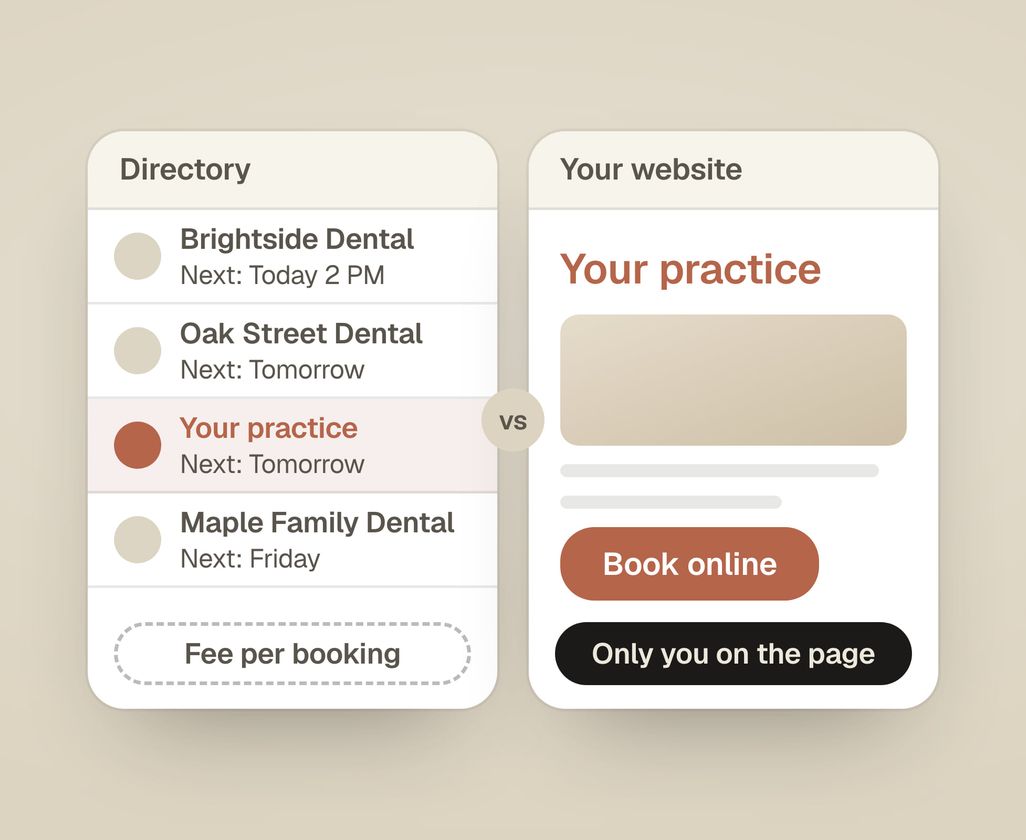
Zocdoc, Healthgrades, Yelp and similar directories list your dental practice next to other practices. The patient searches or books on their platform, under their rules. Your own website is the one place a patient sees only you, where the booking comes straight to your practice. Be on the directories, but do not depend on them. This guide covers what each kind of platform does, who owns the patient relationship, how the costs work, and a setup that uses both.
What are Zocdoc, Healthgrades and Yelp, exactly?
They are different kinds of platforms, and each works differently:
- Zocdoc is a booking marketplace. Patients search by specialty, location and insurance, see open times, and book through Zocdoc. Practices pay Zocdoc for new-patient bookings. Zocdoc’s terms and fees have changed over the years, so check its current pricing directly before deciding.
- Healthgrades is a provider directory with ratings. It creates profiles from public data such as the national NPI registry, so your practice and your dentists are probably already listed. Claiming and editing a profile is free; Healthgrades also sells paid and sponsored options.
- Yelp is a general local-business directory with reviews. The page is free, and Yelp sells advertising on top. Yelp has strict review rules: it tells businesses not to ask customers for reviews, and it filters reviews it believes were solicited.
- Insurance carrier directories (the “find a dentist” tools your PPO networks run) are where many insured patients start. Being listed correctly there is part of being in network.
- Google Business Profile is a directory too, and it is where many patients start. Our Google Business Profile checklist covers it.
A directory is a list of many practices. Do not treat one as your website, or as your whole marketing plan.
What does a booking marketplace actually send you?
Mostly new patients for routine care. Fewer of them come from the marketplace than its dashboard shows, and few are high-value cases.
- New patients, often for routine care. Cleanings, exams, a filling, an urgent visit. These patients choose on insurance, distance and the next open time. That is real business, and it can fill hygiene gaps.
- Fewer than the dashboard suggests. Some patients who book through a marketplace already knew your name, or would have found you on Google anyway. Over a month or two, count the patients who booked there, showed up, and came back for a second visit.
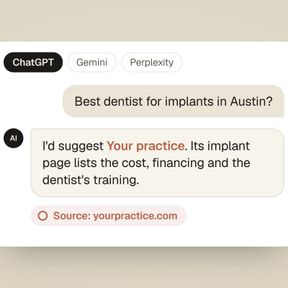
- Rarely the highest-value cases. A patient weighing a $4,000 implant or a full set of veneers does not usually pick a dentist from a filtered list of open times. They read treatment pages, look for the dentist’s training and real cases, and compare a few websites. That decision happens on your site or a competitor’s.
What do you give up on a directory?
- Control of the ranking. Each platform orders its results by its own rules, which can include paid placement, profile activity and availability. You cannot earn the top of their list the way you earn a place in the Google map results.
- Part of the patient relationship. The booking, reminders and messages may run through the platform. Reviews left there stay there if you leave.
- Money, on paid products. You pay per booking or a monthly placement fee. When you stop paying, the bookings stop. Nothing builds up for you.
- Patients’ full attention. Your profile page also suggests other practices to every patient who visits it.
What does your own website give you?
- Every kind of patient, including the high-value ones. The implant patient who read your page at 11pm and booked a consultation. The nervous patient who read how you handle anxiety. The family that checked which PPO plans you take.
- The booking, directly. Online booking or the phone, straight to your practice. The patient’s details go into your practice management system, not a third party’s.
- A page where you are the only practice. Your dentists, your treatments, your fees, your reviews.
- Something that builds up. A treatment page published this year can keep ranking next year without being paid for again.
How do the costs compare over a year?
| Free directory profile | Paid marketplace or placement | Your own website | |
|---|---|---|---|
| Upfront | Free | Free or a setup fee | One-time build |
| Ongoing | Free; time to keep it accurate | Per booking or monthly; check current pricing | Domain, hosting, upkeep |
| Who decides your ranking | The platform | The platform, partly through what you pay | Your work, on Google |
| Who holds the patient relationship | Shared with the platform | Shared with the platform | You |
| When you stop | Profile stays | Flow stops | Site keeps working |
| After three years | A profile | Fees paid, nothing kept | A website you own |
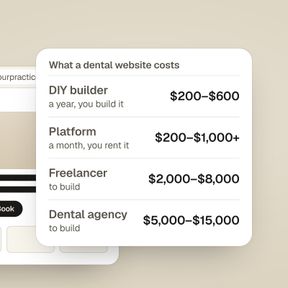
A website costs more on day one. Over two or three years it is usually the cheaper option, and it is the only one you own at the end. Our guide on what a dental website costs has the US price ranges.
How do you work out whether a paid marketplace pays?
Use the same math you would use for ads:
- Over two or three months, total what you paid the platform.
- Count the patients who booked through it, showed up, and returned at least once.
- Divide the first number by the second. That is your cost per real new patient.
- Compare it with what a new patient is worth to your practice over a year or two, and with what your Google listing and website bring in at no per-patient cost.
If the number holds up, keep it. If it does not, the money usually does more on your own pages and your Google Business Profile.
What setup uses directories without depending on them?
- Claim and correct every profile that matters. Google Business Profile, Healthgrades, Yelp, Zocdoc if you use it, and your insurance carriers’ directories. Same practice name, address, suite number and phone everywhere, exactly as on your Google listing.
- Link every profile to your website, ideally to a booking page.
- Put the real effort into Google. It is where the search usually starts, and the map results reward work you can do: categories, services, photos, reviews and replies. Our Google Business Profile service goes through every part of your listing. Our local SEO service keeps your details the same across directories.
- Build the website to book. The dentists by name, a page per treatment with a fee range, insurance and financing information, real reviews, and online booking on every page. The how to get more patients guide has the order.
- Send review requests to Google, not Yelp. Google reviews feed the map ranking and can be shown on your site. Our guide on how to ask patients for Google reviews has the scripts.
- Reply to reviews everywhere, carefully. On every platform, a reply must never confirm that the reviewer is a patient or mention their care. That is a HIPAA issue, and federal regulators have fined dental practices over review replies.
- Pay for placement only if the numbers hold up. Try it, measure the cost per real patient, and keep it only if that cost is worth it.
What is the short version?
Keep every directory profile accurate, put your effort into Google and your own website, and make sure patients can always reach a page where yours is the only practice.
How does Studio Smirk set this up?
We build this setup for practices. We work on your Google listing so patients nearby find you. We build a website patients can book from, and we make sure your directory profiles link to it. The accounts are in your practice’s name. See our pricing, or read how we work with dentists and cosmetic and implant practices.
The audit compares your spot on Google Maps, your reviews and your website with the top three practices near you on Google. It also shows what you may be losing each month. Get my practice audit.