How to Get More Dental Implant Patients
Implant patients research for weeks or months before they book. They compare the price, who places the implant and what the steps are, and they book a consult with the practice that answered those questions best. To get more of them, you need to show up when they search, answer their questions on one clear page, and make the consult easy to book.
The good news for a general practice: implant searches work differently from “dentist” searches, and reviews matter less than you might think.
Who shows up when patients search for dental implants?
On 11 October 2026 we looked at Google’s local results for “dental implants in Plano TX” and “dental implants in Frisco TX”, and compared them with the same cities’ results for “dentist”.
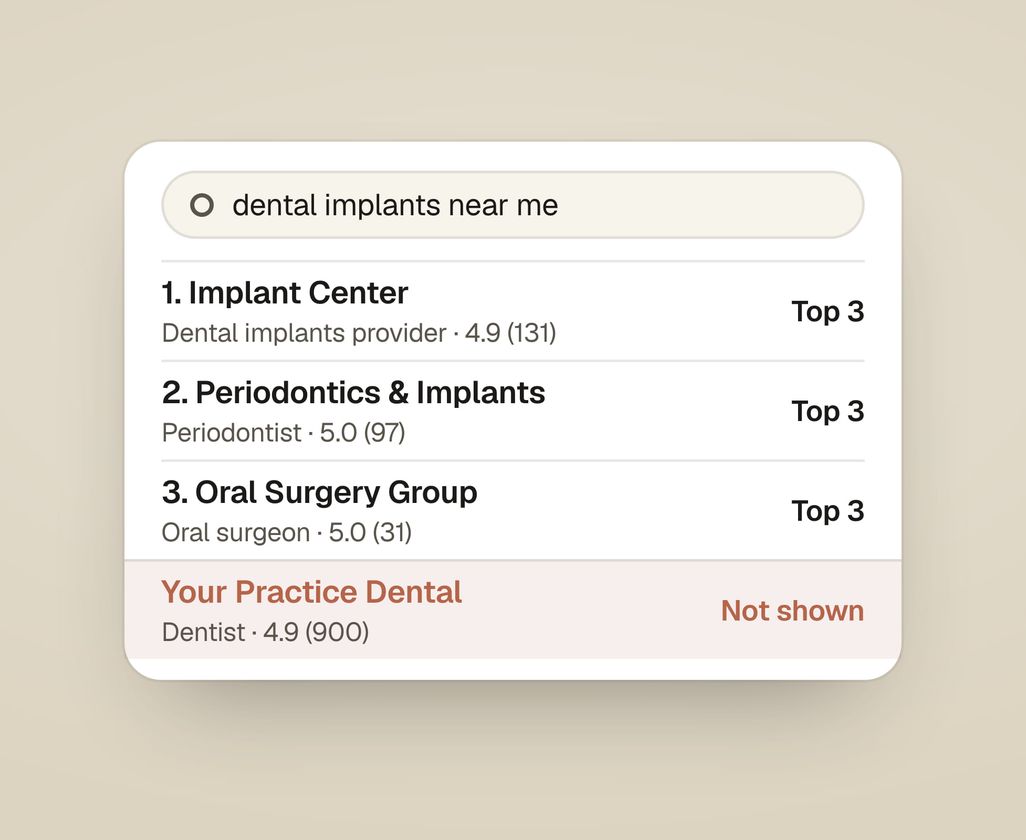
- Specialists and implant providers fill most of the top 10. In Plano, 8 of the top 10 listed a category such as “Dental implants provider”, “Periodontist” or “Oral surgeon”. Only 2 used “Dentist”. In Frisco, 3 of the top 10 were general dentists.
- Reviews matter far less. For “dentist”, no practice in either city’s top 10 had fewer than about 270 reviews. For “dental implants”, listings with 31, 7 and even 4 reviews made the top 10.
- Ads sit on top. Plano’s implant results opened with three sponsored listings, most of them cosmetic practices.
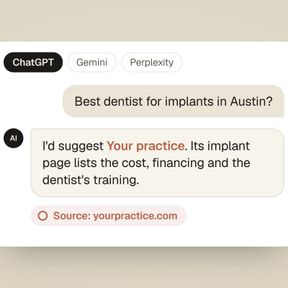
What that means: Google is matching the search to practices that say they do implants. A general practice that places implants, but lists only “Dentist” and has no implant page, is invisible for these searches, however many reviews it has.
Invisalign searches in the same cities looked the same: orthodontists held 18 of the 20 top spots. Our guide to Invisalign marketing for dentists shows where a general practice wins instead.
What does an implant patient need before they book?
Five questions, in roughly the order they ask them:
- What will it cost me, all in? A single implant with its crown often runs several thousand dollars, and a full arch tens of thousands. Patients look for a number first and leave sites that hide it.
- Who places it, and how many have they done? They want to know whether your dentist places implants or refers to a surgeon, and how experienced that person is.
- What are the steps, and how long does it take? Extraction, healing, placement, the crown. Weeks or months, and how many visits.
- Will it hurt, and will it last? Sedation options, recovery, and what happens if something goes wrong.
- Am I a candidate? Bone loss, health conditions, smoking. Many fear they’ll be turned away.
A practice that answers all five before the first call gets the consult. A practice that answers “call us for details” usually doesn’t.
What should your implant page include?
One page per main option you offer: single-tooth implants, implant-supported dentures, and full-arch implants if you do them. On each:
- A price range or a “starting from” price, what it includes, what can add to it (extractions, bone grafts, sinus lifts), and the financing you accept.
- Who places the implant at your practice, with their training and how long they have done it. If a specialist does the surgery and you restore it, say so.
- The steps, with a realistic timeline and the number of visits.
- Real cases from your practice, with written consent for every photo.
- Who is and isn’t a candidate, in plain words, and what you do when bone is thin.
- A consult button that books or requests a time in one step, with what the consult costs and what it includes (often a scan).
Name your town and the nearby neighborhoods on the page, the way patients search. Our guide to ranking higher on Google Maps explains how the page helps your listing.
How should your Google profile match?
- Categories. Keep “Dentist” as the primary category for a general practice. If you place implants, add “Dental implants provider” as a secondary category. Only add it if it’s true.
- Services. List implants as a service with a one-line description and link it to the implant page.
- Photos. Your team, the operatory, the scanner. No patient photos without written consent.
- Reviews. Ask every patient, the same way, and never script what they write. Implant patients often mention implants on their own. Our guide on asking patients for reviews has the scripts.
Should you advertise implants?
Advertising makes sense once the page and the profile work, because ads send people to whatever is already there.
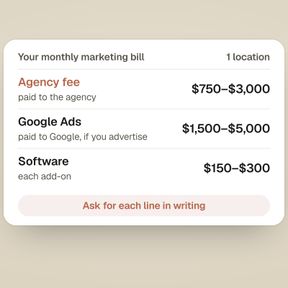
- Google Ads. Implant searches cost several times more per click than general dental searches. Send every click to the implant page, not the homepage, and judge the ads by cost per consult booked. Our guide to Google Ads costs for dentists works through the sums.
- Local Services Ads. You pay per lead rather than per click, but the lead lands on your Google profile, not your implant page. Our Local Services Ads guide covers when that fits.
One implant case can be worth more than a month of ad spend, so it is fine for the cost per consult to look high next to a cleaning. What matters is how many consults turn into cases.
How do you turn consults into cases?
- Answer the same day. An implant patient comparing three practices books with the one that calls back first.
- Give the price in writing at the consult, broken down, with the financing options next to it.
- Follow up after a week if they haven’t decided. Many need time to talk it over at home.
- Track it. Consults booked, consults held, cases started. Without those three numbers you can’t tell whether the website, the ads or the consult is the weak point.
What rules should you know?
- “Specialist” is regulated. Implant dentistry is not one of the ADA’s recognized specialties, and each state board sets its own rules for the word. Texas’s rules went to federal court. Check your state’s advertising rules before you use it.
- Before-and-after photos need written consent from each patient, and must be your own cases.
- No guarantees. Don’t promise results, a pain-free procedure or a lifetime implant.
Where does Studio Smirk sit?
Our Signature plan is built for practices that want more high-value patients like implant cases: procedure pages each month, a deep-dive on your top competitors, and a plan for which treatments to push first. Prices are on our pricing page, and you can read more about how we work with cosmetic and implant practices.
The practice audit shows where you stand on Google against the three practices above you, and what to fix first. Get my practice audit.